
Click here to download a pdf of Alex’s lesson
Click here to download a copy of Alex’s Google slides
Objective:
Students will improvise and compose rhythms using quarter notes, eighth notes, sixteenth notes, and eighth-
sixteenth pairs.
Lesson Details:
This lesson is based on a chant by Ryan Colbert. It is intended for grades 3-5. After performing the simple question/answer chants, students can improvise and compose rhythms using iconic or standard notation. This lesson can also be performed in rondo and includes a body percussion ostinato.
Step 1:
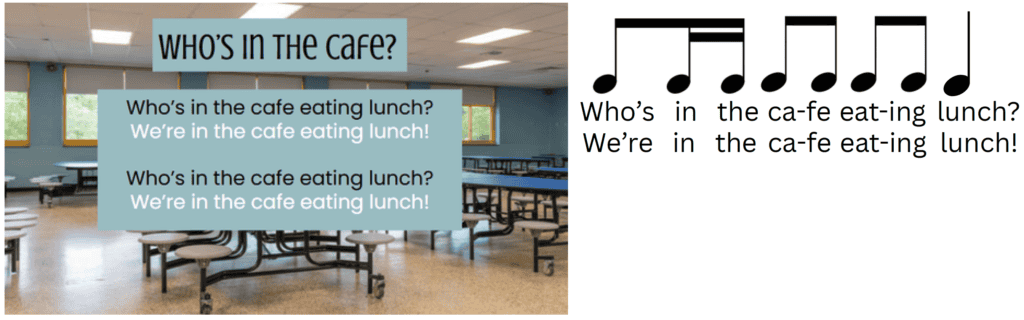
Teacher and students participate in the question and answer (A Section) – they will pick up on this quickly! Encourage students not to shout, but to have some “attitude” when responding for extra fun. The student part is highlighted in white on the included Google Slides.
Step 2:
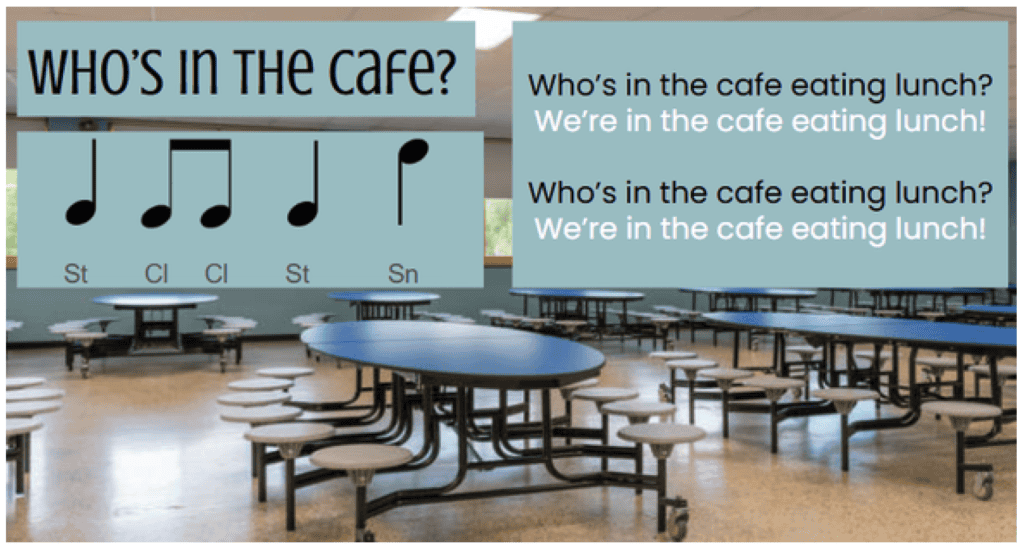
Add in the body percussion ostinato.* I tell students to watch me first, and join when they are ready. I also say the words “stomp, clap clap, stomp, snap” as I repeat the pattern so students hear the words and see the actions. When students are able and ready, add the question and answer chant back in.
Repeat several times until successful!
*This is the same body percussion ostinato used in “Piccadilly Travel” from Purposeful Pathways 2, which I like to teach before this lesson! Used with permission.
Step 3:
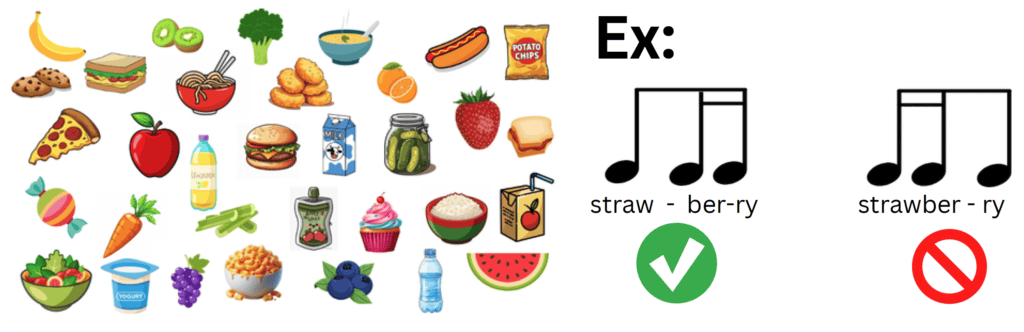
Next comes the improvisation section. Display the “menu” of items to students that they can have for lunch. You may choose to have students come up with their own items to add, or use the items provided. Practice clapping the items with the correct emphasis on syllables following natural speech prosody.
After practicing the correct rhythms for the food items, choose 4 lunch items as a class and write the choices on the board or on the Google slide.
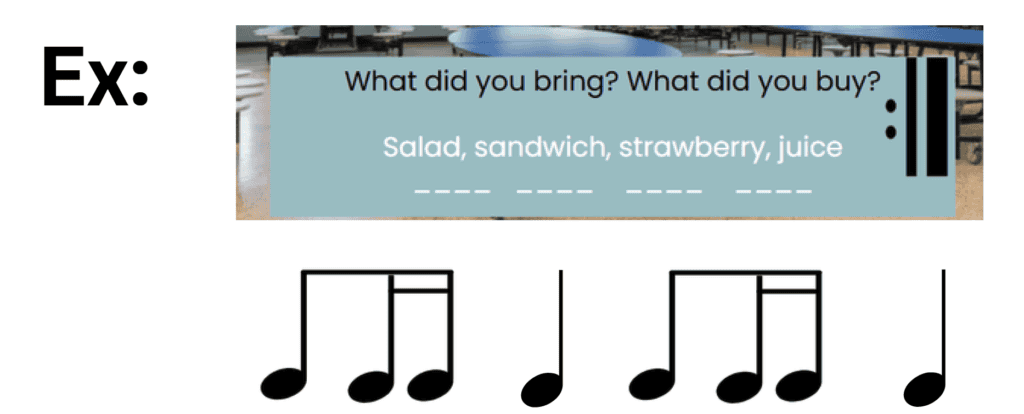
Teacher asks: “What did you bring? What did you buy?”
Students respond with their items within 4 beats all together, saying the words and clapping the rhythm of the words.
Then, add the repeat and perform the question/answer twice. Add the A section back. Try it all in ABA form!
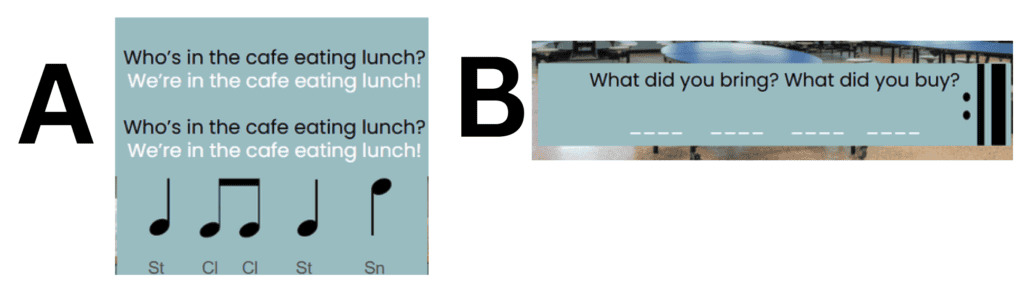
Helpful tip:
This is a great stopping point in the lesson for the day!
Step 4:
After choosing 4 “lunch” items as a class, students choose 4 items individually. Give students time to practice their rhythm on their own, then perform the question/answer with all students saying and clapping their own rhythms.
Teaching questions you might ask:
- Is it possible someone will have a different rhythm than you?
- What might be tricky about performing our rhythms all at the same time?
- Is it okay if someone else has a similar rhythm to yours?
Differentiation opportunity:
- Allow students to choose fewer than 4 items and repeat them to make their rhythm four beats long. This could even be just one item repeated 4 times.
Extension opportunity:
- Students who are excelling might need an extra challenge. Try having them come up with new food items that are not on the “menu” and figure out how the rhythm would fit into 4 beats.
Step 5:
Show the following examples to students and decode the correct rhythms together. Drag the correct rhythms to the blank spaces.
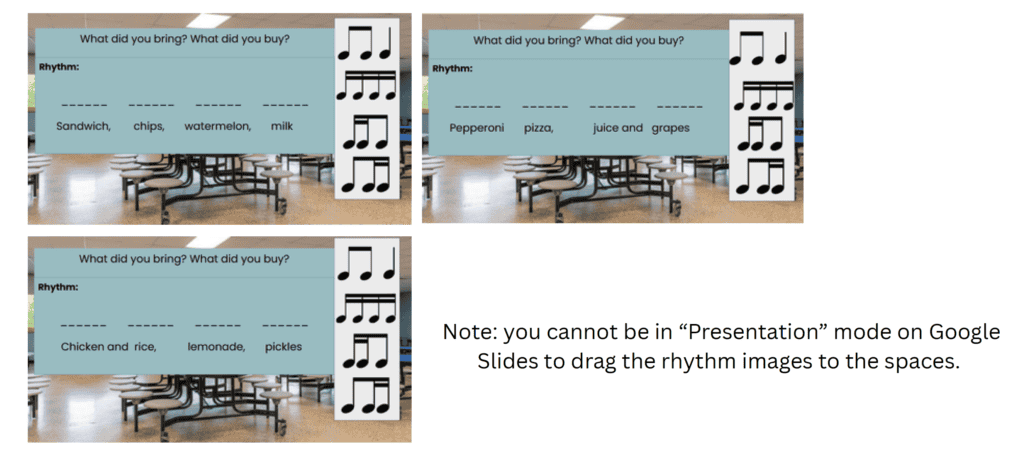
After decoding the correct rhythms, write a new “lunch” word chain with the class. You may choose to use the “menu” in the previous slides, or have students come up with their own food rhythm choices. I find that the menu limits them in a good way to items that will have rhythms that fit nicely into 4 beats.
After choosing the items, write them down in the blank Google slide. Next, drag the correct rhythms that fit the rhythm of the words.
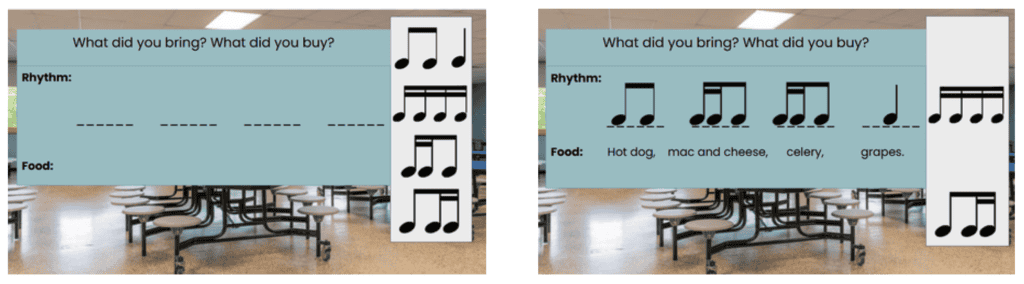
Now, try performing this new rhythm with the question/answer.Teachers says the top words “What did you bring? What did you buy?” and students respond by saying and clapping their rhythm.
Helpful tip:
This is a another great stopping point in the lesson!
Step 6:
Time to compose! Break students into groups of 3-4 and hand out the worksheet (final Google Slide), which is a blank version of the slide above. Display the “menu” of items students can choose from. Groups first write down the foods they want to use under the blank spaces. Then, they choose the correct rhythm and write it above the blank spaces.
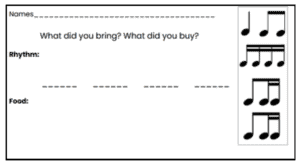
If students want to use items other than what is on the menu, I have them clear it with me first, so I can make sure it will fit rhythmically.
When students are finished writing their rhythms, they should practice saying and clapping the words as a group, making sure each member is successful, and that their tempo stays steady.
Extension opportunities:
- Groups may try adding new body percussion to their rhythm instead of just clapping, such as patting, snapping, or stomping.
- Non-pitched percussion instruments can be added instead of body percussion. I like to use floor drums (such as tubanos), so that when students are playing sixteenth notes, they can use alternate hands.
Step 7:
After composing, put everything together! Each groups’ composition can be performed individually in a rondo.
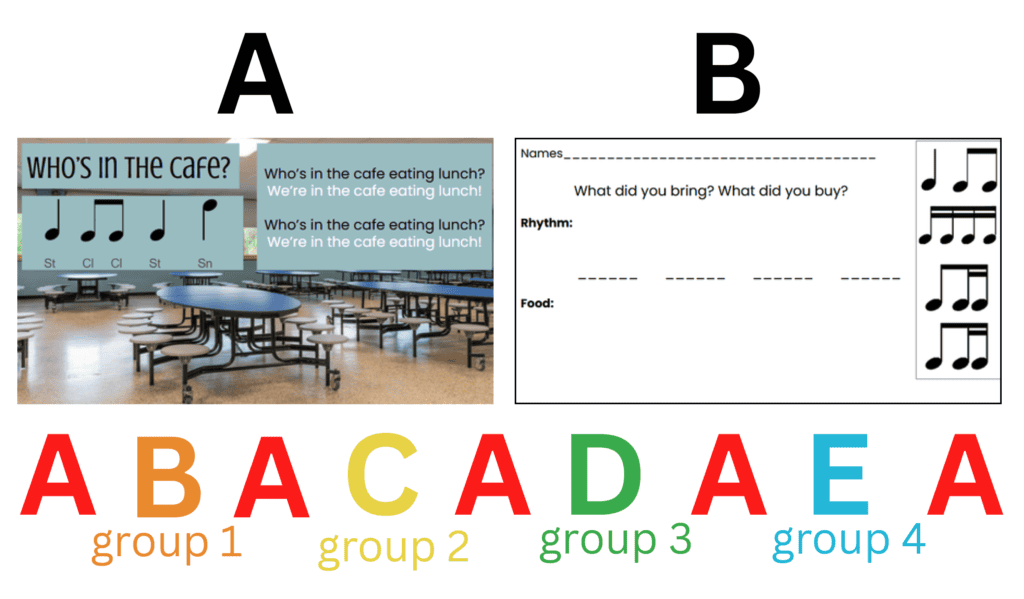
Enjoy! If you have questions about the lesson or my process, please comment below. 🙂 -Alex








One Response
Fun! Love it. My mind went straight to using lots of recorder throughout this lesson beginning with simply saying the foods… then you can “play” the foods on different known notes. Can also have the groups create a little recorder melody for their composition… one food, one note.