Overview
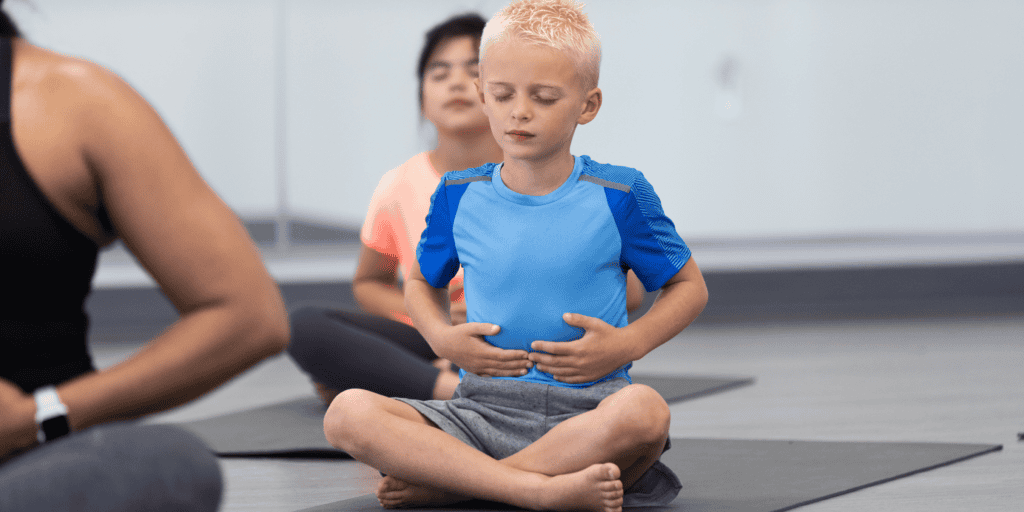
This lesson introduces students to the concept of emotional boundaries through imagery, movement, breath work,poetry, and creative expression. Using an Orff-inspired approach, students explore how feelings can “build up,” how they affect the body, and how mindful breathing and movement can help release stress and refocus attention.
The lesson integrates social-emotional learning with creative movement and listening, helping students connect emotional awareness with physical experience.
Suggested Grade Levels: K–5 (adaptable)
Lesson Length: 10–20 minutes
Materials:
- Lightweight scarves (1 per student)
- Recorded music: Clair de Lune (Debussy)
- Optional: dimmable lighting
Learning Objectives
Students will:
- Understand the idea of emotional boundaries in age-appropriate language
- Recognize how emotions can affect the body
- Practice simple mindfulness breathing strategies
- Use movement to symbolically release stress
- Transition into a focused learning mindset
Introducing Emotional Boundaries
Begin with a simple explanation:
“Sometimes we have really big feelings. Sometimes the people around us have really big feelings, too. Emotionalboundaries help us understand which feelings belong to us—and how to take care of ourselves when feelings start to feel too heavy.”
Explain that while we can care about others’ feelings, we don’t have to carry them all day.
The Water Glass Demonstration (Guided Imagery)
Invite students to imagine holding a glass of water straight out in front of them.
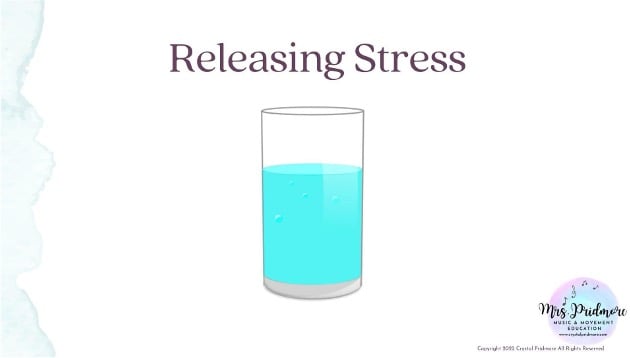
Ask:
- “Does the glass feel heavy right now?”
- “What if you had to hold it for five minutes?”
- “Ten minutes?”
- “An hour?”
Guide students toward noticing how something small becomes uncomfortable when held too long.
Explain:
“Feelings can work the same way. When we hold on to stress, worry, or someone else’s emotions for too long, theystart to take up all our attention. But when we learn how to set them down, our bodies and minds feel better.”
Pause and invite students to pretend to gently place the imaginary glass down.
Ask:
“How does your body feel when you put it down?”
Connect their responses to emotional release.
Mindfulness: Preparing the Brain to Learn
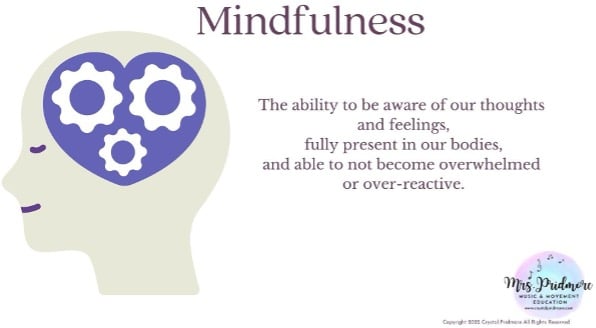
Explain:
“Mindfulness means noticing what is happening in your body and your thoughts right now. When we slow down and pay attention to our breathing, we help our brains get ready to learn.”
Lead students through a short breathing exercise:
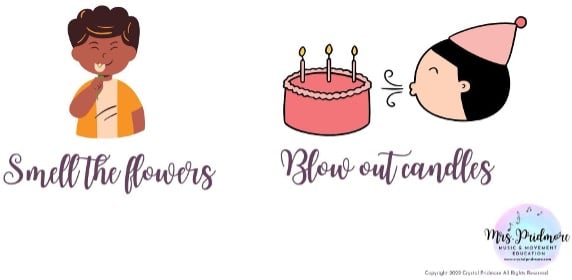
Smell the flowers (inhale slowly)
Blow out the birthday candles (exhale slowly)
Repeat 3–4 times.
Encourage students to notice:
- their shoulders relaxing
- their breathing slowing
- their bodies feeling calmer
Belly Breathing Poem (Call-and-Response Option)
Teach the poem using echo speaking, steady beat tapping, or gentle body percussion.
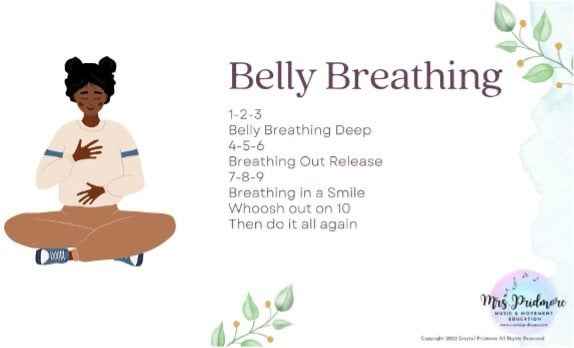
Belly Breathing Deep
1–2–3
Belly breathing deep
4–5–6
Breathing out release
7–8–9
Breathing in a smile
Whoosh out on 10
Then do it all again
Invite students to place their hands on their bellies to feel the breath moving. Optional extensions:
- Add a steady beat on knees
- Transfer beat to instruments
- Speak in whisper voice, then normal voice
- Layer with simple bordun accompaniment
Scarf Movement: Releasing and Gathering Feelings
Dim the lights if possible and distribute scarves. Say:
“Think about something you might still be holding on to today—maybe a worry, a frustration, or something that felt hard earlier.”
Guide students through movement imagery:
Wrap It Up
Students gently wrap the feeling into their scarf.
Release It
Students lift scarves and let the feeling float away.
Gather the Good
Students swirl scarves overhead and around their bodies, collecting calm, focused energy. Encourage large, flowing movements that match the shape of the music.
Canopy of Color Movement Activity
Play Clair de Lune (Debussy).
Invite students to create a “canopy of color” together by lifting scarves overhead and moving them slowly through space.
Movement suggestions:
- high/low levels
- slow turns
- mirrored partner movement
- group wave motion
- freeze and breathe moments
Encourage students to move with the music rather than “perform” for an audience.
Closing Reflection
Gather students back into a seated circle. Ask:
- “How does your body feel now?”
- “Do you feel different than when we started?”
- “What helped you let go of the heavy glass today?” Reinforce the takeaway:
“We can notice our feelings, take care of them, and let them go when we are ready. That helps our brains and bodies be ready to learn.”
Teacher Notes (Orff Connections)
This lesson supports:
- whole-child learning
- body-based awareness
- breath-to-movement connections
- imaginative play
- ensemble awareness through shared movement
- transitions into focused music-making
It works especially well:
- at the beginning of class
- after recess
- during high-energy days
- before expressive movement lessons
- as part of SEL-integrated music curriculum
Teachers may revisit the water-glass imagery throughout the year as a familiar self-regulation strategy students can access independently.