Baile Folklórico
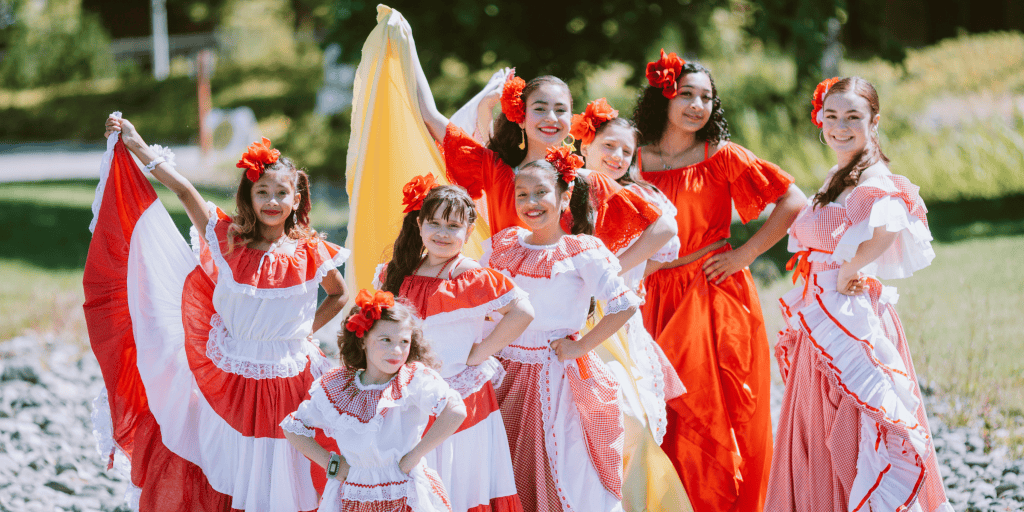
Baile Folklórico is a powerful symbol of Mexican heritage and identity, and can be traced back to ceremonial and social dances of indigenous people living in Mexico. The term Baile Folklórico represents traditional cultural dances that emphasize local folk culture with ballet characteristics, such as pointed toes, rhythmic footwork, and highly choreographed, often synchronized movement by participants. Rather than being one specific style of dance, the name actually refers to many traditional dances from Mexico’s different regions and states. These dances are used to represent elements of the culture from the area it’s from, sometimes depicting an animal from that area, a historical event, or another element of the local lifestyle. Men often carry props, and women often wear full skirts with ribbons, the colors of which represent an element of the community the dance comes from.
Lesson
Read Green Is a Chile Pepper by Roseanne Greenfield Thong to students, stopping to have students practice pronouncing the Spanish words, and giving definitions throughout the story and making cultural connections.
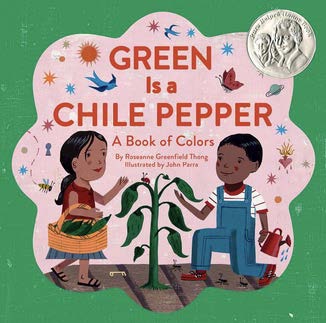
Refer back to the second red/rojo page, and point out the term Baile Folklórico. Discuss what they see in the pictures and then share information about Baile Folklórico and watch authentic examples. What connection can you make between Baile Folklórico and the way you dance? Click here to download the Google slides presentation I use with my students.
Teacher Talk
When we watch authentic examples of music or movement, we are watching people who have practiced for long periods of time and who are members of the culture we are learning about, making them the experts in what they’re doing. Because we are not experts in every culture, we are not able to authentically recreate Baile Folklórico in our classrooms. The focus here was not to mimic the style, but instead, it was to connect to the culture and increase our own creativity by growing our movement “vocabulary” each time we watch others move to music. Watching the videos and learning about Baile Folklórico ahead of time really helped students to show more creativity in the ways they used their scarves for movement. We can use what we see as inspiration for creating our own dances without trying to mimic or replicate.
Creating Movement
On another day, do a quick review of Baile Folklórico before giving students time to create their own movement. What are some things they remember about Baile Folklórico that they could use as inspiration for their own movement?
I’ve done this lesson with Kindergarten through 2 grade students, and I did it basically the same way for all three grades, with small tweaks in their expectations for what their movement should include. In partners, hand out scarves in the colors represented in the story. Using what they saw about Baile Folklórico as inspiration, along with other ideas they have, they will create movement that they will share with the class.
With kindergarten, students create two moves and perform them for 8 beats each, then repeat With it in an ABAB pattern. That’s plenty for kindergarten, particularly if you are using this lesson during Hispanic Heritage Month (September).
In First grade, I kept the same rules, but had them add locomotor movement. If they need a refresher, I remind them that locomotor movement is where you move from one place to another, while stationary movement is when you move while standing in one spot. Their final performance should include both locomotor and stationary movement.
For second grade, they needed to include locomotor movement and levels (low, medium, high) so that their scarf wasn’t always at the same level while they were dancing.
Though I haven’t taught this lesson with older students, you absolutely could, and the directions could be more abstract. What does their color “feel” like, and how could they “act it out?” Could they extend to 16-beat phrases, or do 8 different moves instead of 4?
For the performance, read the story again, with music playing. The music I chose was Baile Folklórico, performed by Lars-Luis Linek & Johannes Matthias Hoffmann, on the album Authentic World Series: Spain, but there are many other options on YouTube as well. As students hear their color in the story, they get ready to perform, and their dance begins after their page is done being read.
Click here to download a pdf of Katie’s lesson.