

If you walk down the hallway to my music room, chances are you will hear two things: singing and laughter. My favorite sound in the world is the spontaneous giggles that erupt from a group of 7- to 9-year-olds delighted by a discovery. Children are hardwired to learn through play. They are naturally curious little scientists, eager to explore their world and express their experiences in creative ways. Teaching has always been a passion of mine—seeing eyes light up and voices rise with enthusiasm is deeply rewarding. But my classroom wasn’t always so lively, engaged, and joyful. As an educator, there have been pivotal moments in my career that redefined my teaching philosophy. One of these transformative experiences was receiving training in the Orff Schulwerk approach. It changed not only how I taught music but also how I understood the learning process itself. This blog post aims to delve into the essence of Orff Schulwerk, clarify common misconceptions, and explore why it’s considered a “process” rather than a “method.”
Defining Orff Schulwerk
Orff Schulwerk, often referred to as the Orff approach, is a dynamic and interactive process of teaching music and movement. The central tenet of Orff Schulwerk is that all children can make music, and this should be an inclusive, enjoyable, and engaging experience. Developed by composer Carl Orff and his collaborator Gunild Keetman in the mid-20th century, this approach emphasizes active participation, creativity, and the integration of music, speech, movement, and drama. [1] Characterized by learning musical patterns through elemental building blocks (or, the most simple elements of a piece of music) experientially through speech, body percussion, and movement, as well as harnessing the creative improvisation and composition skills of the students, an Orff lesson will produce collaborative and unique outcomes.
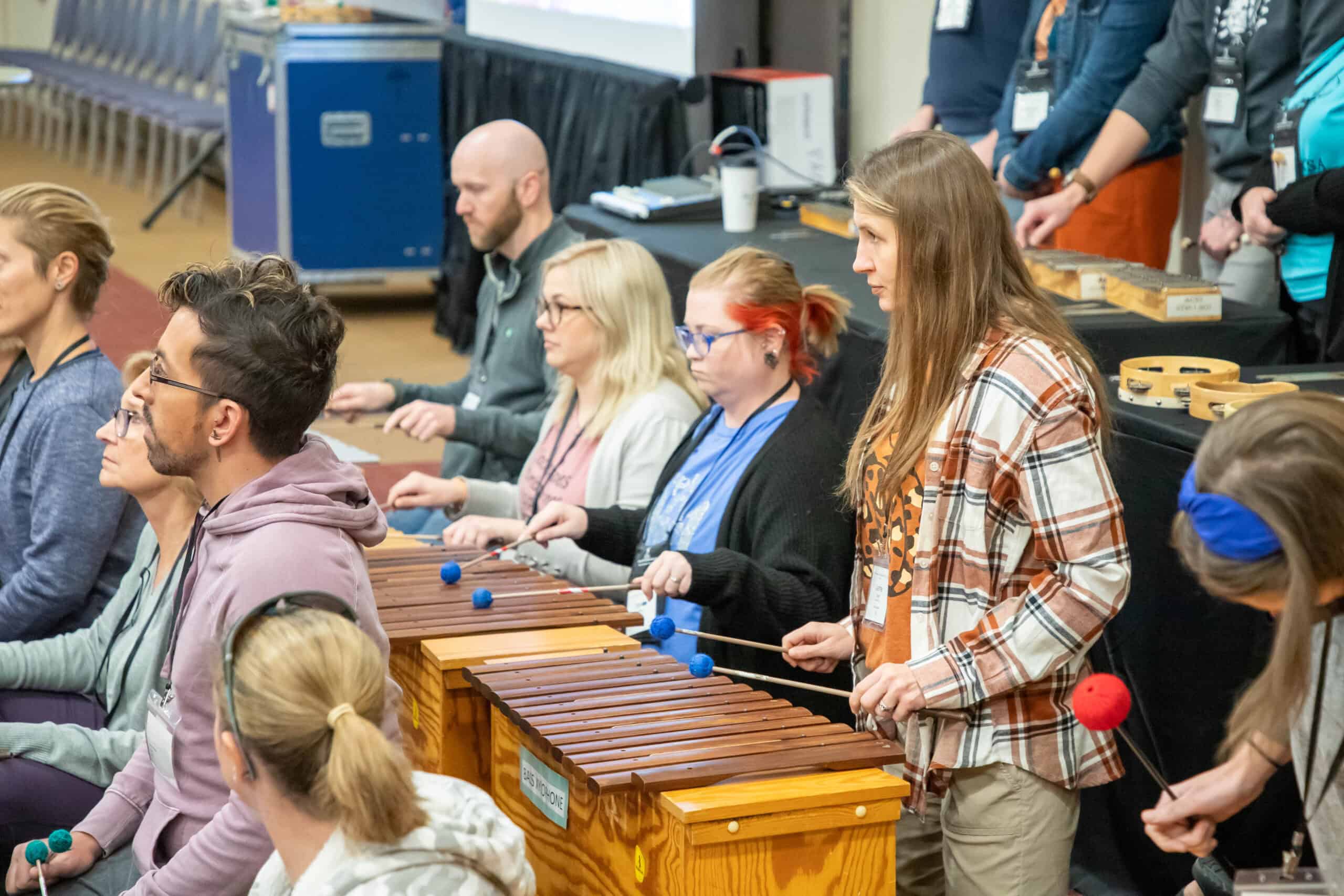
A crucial distinction to make is that Orff Schulwerk is not defined by its instruments. While Orff instruments (such as xylophones, metallophones, and glockenspiels) are commonly associated with this approach, they are not prerequisites. You can have a classroom full of Orff instruments and still not embody the Orff process, or you can effectively teach the Orff approach without a single instrument.
The American Orff-Schulwerk Association (AOSA) defines Orff Schulwerk as “a child-centered approach to music education that integrates music, movement, drama, and speech into lessons that are similar to a child’s world of play.” [2] For instance, students may act out stories or use spoken word as part of a musical composition. This holistic approach helps develop the whole child, engaging them intellectually, emotionally, and physically.
This definition captures the essence of Orff’s philosophy: learning by doing, fostering creativity, and making music education accessible and joyful.
A Brief History of Orff Schulwerk
Carl Orff, a German composer best known for his work Carmina Burana (I guarantee you’ve heard it), sought to create a way of teaching music to children that was experiential, holistic, and deeply rooted in human expression. In collaboration with Gunild Keetman, he developed the Orff Schulwerk approach, which he described as “elemental music,” referring to basic musical elements like rhythm, melody, and harmony. Orff’s method encourages children to explore these elements at a fundamental level through games, songs, and activities. This concept emphasizes simplicity, improvisation, and the integration of different art forms.
Orff and Keetman’s work culminated in the publication of the Music for Children series, which provided a structured yet flexible framework for teaching music. Over time, the Orff Schulwerk approach gained international recognition and was adapted to fit diverse cultural contexts, ensuring its relevance in classrooms worldwide.
The Orff Process vs. Method
In many college music education courses, a distinction is made between “methods” and “processes.” Kodály, for example, is often taught as a method—a structured series of steps aimed at achieving specific musical skills. Orff Schulwerk, on the other hand, is a process. This means it is less about following a rigid sequence and more about providing a framework that teachers can adapt to meet the needs and interests of their students.
The Orff process is rooted in exploration, improvisation, and collaboration. It invites students to be co-creators in the learning process rather than passive recipients of information. This flexibility is one of the reasons why Orff Schulwerk resonates so deeply with educators and students alike.
What About Orff Instruments?
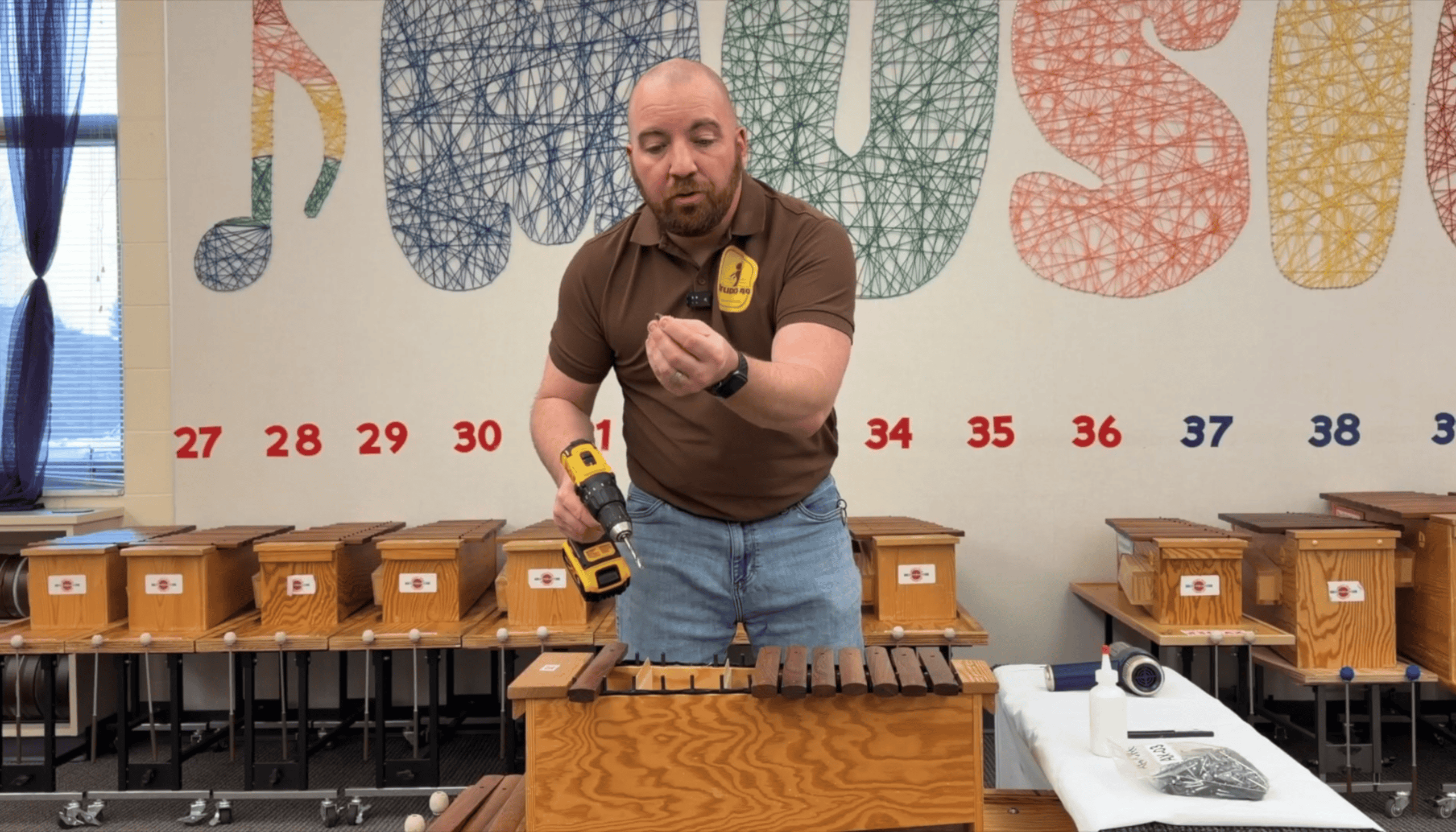
Orff instruments often steal the spotlight, but they are just one aspect of the approach. These percussion instruments—including barred instruments like xylophones and metallophones—were designed by Carl Orff and his friend Karl Maendler to be accessible and intuitive for children. Their simplicity allows students to focus on creativity and musicality rather than technical complexity. These instruments are often used because they are easy for children to play and offer a wide range of tonal possibilities, including easily removing or rearranging the pitched bars to create different tonal soundscapes. The instruments are played in an ensemble setting, helping students work together and develop their sense of timing and harmony.

However, the true magic of Orff Schulwerk lies in how these instruments are used. They are tools for exploration and expression, not ends in themselves. Orff teachers guide students to improvise, compose, and collaborate using these instruments, integrating them seamlessly with movement, speech, and drama.
The Orff Process: A Roadmap to Creativity
At its core, the Orff process is about fostering creativity through a series of interconnected steps. While the specifics may vary, the general outline often includes:
- Imitation: Students learn by imitating sounds, rhythms, movements, or patterns introduced by the teacher. This stage builds foundational skills and confidence, which helps them develop musical skills in an intuitive way.
- Exploration: Once students are comfortable, they are encouraged to explore and modify what they have learned. For example, they might experiment with different ways to play a rhythm or move to a piece of music.
- Improvisation: Students create their own musical or movement ideas, building on the skills and concepts they have explored. Improvisation is a cornerstone of the Orff approach, empowering students to express themselves authentically.
- Creation: The process culminates in the creation of original works, whether it’s a piece of music, a dance, or a dramatic scene. This stage allows students to synthesize their learning and showcase their creativity. Honoring and incorporating the ideas and musical expression of the students creates a sense of ownership and deep connection with their musicality and creativity.
This process is not linear; it’s cyclical and adaptable. Teachers can revisit steps, modify activities, and tailor the process to suit their students’ needs. [3]

Why Orff Schulwerk is “Good Teaching”
At the end of the day, the Orff Schulwerk process is more than a music education approach—it’s a philosophy of teaching that transcends disciplines and academic subjects. It embodies principles of good teaching, such as:
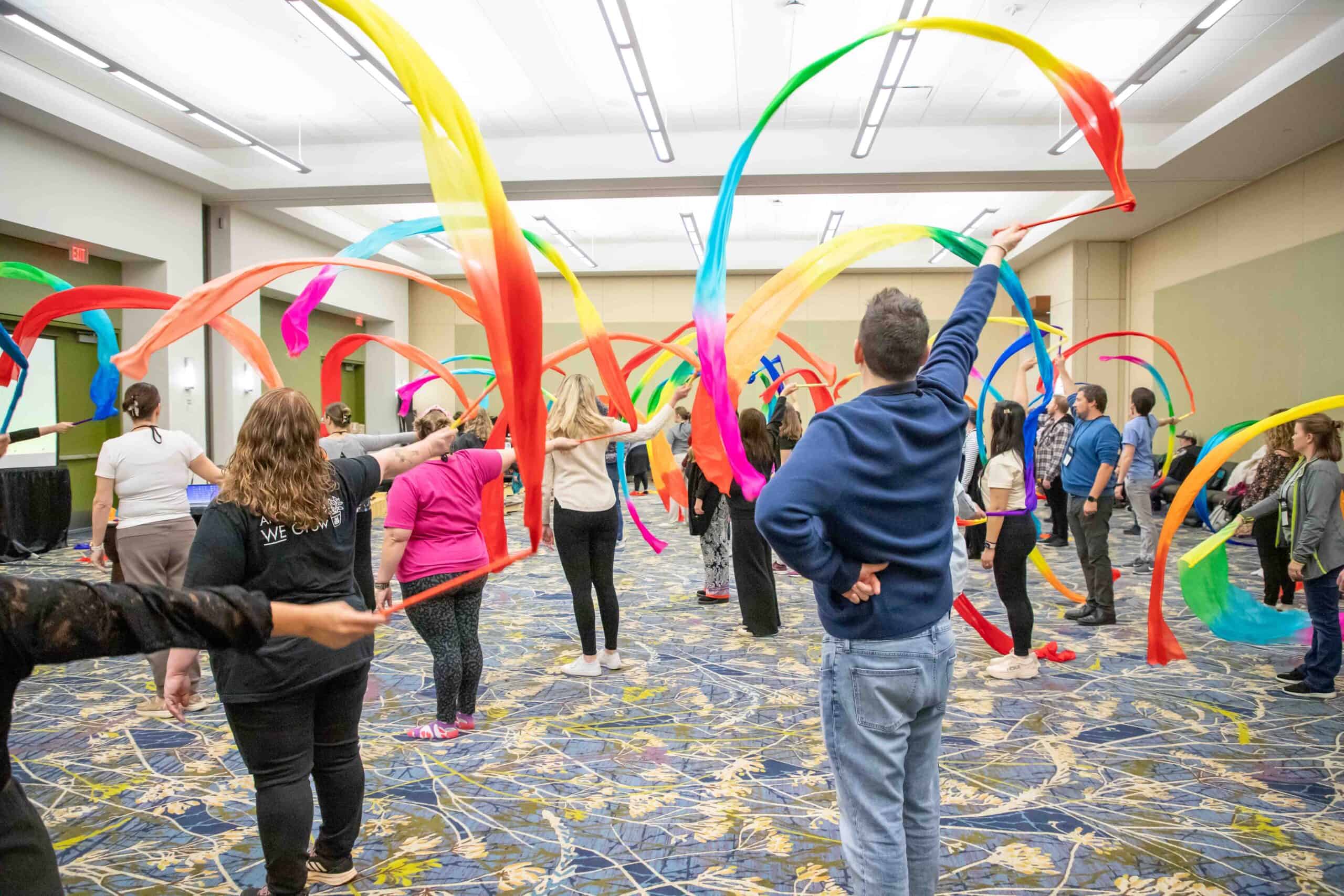
- Engagement: Lessons are active, participatory, and designed to capture students’ interest. Music is often taught through body percussion and movement. Children might clap, tap, stomp, or use other body movements to internalize rhythms and musical patterns. This physical aspect of learning makes the process fun and engaging, while also reinforcing the connection between music and the body.
- Differentiation: The process is flexible, allowing teachers to meet students where they are and build on their unique strengths. Orff’s method follows a sequential learning process, where musical concepts are introduced gradually and in a way that builds on what students have already learned, as well as harnessing their unique strengths. This allows children to gain confidence and skills at their own pace, while also ensuring that foundational concepts are solid before moving on to more complex ideas.
- Collaboration: The approach fosters a sense of community, encouraging students to work together and learn from one another. Students often work in groups to create and perform music together, fostering teamwork, communication, and a sense of community. The teacher acts as a guide, encouraging exploration and providing structure where needed.
- Creativity: By prioritizing improvisation and creation, Orff Schulwerk nurtures students’ creativity and critical thinking skills. The Orff approach encourages students to use their imagination and self-expression. Through improvisation and performance, students are given opportunities to express themselves creatively and emotionally, which deepens their engagement with music.
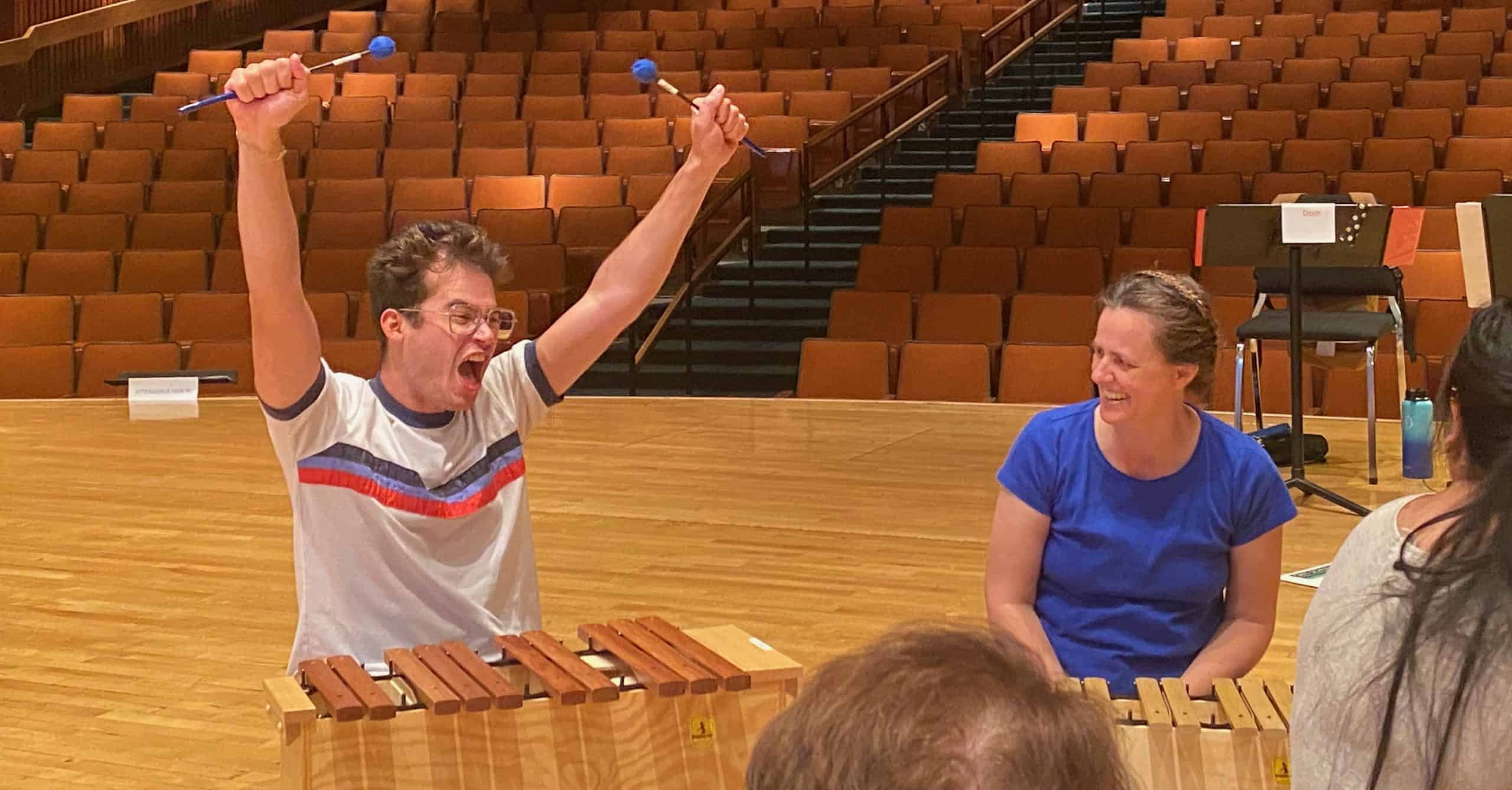
- Joy: Above all, the Orff approach makes learning joyful. It taps into the natural playfulness and curiosity of children, making music education an enjoyable and enriching experience. At its core, Orff Schulwerk is about making music playful and fun. The activities are designed to be enjoyable and to spark curiosity, creativity, and excitement in children, ensuring they develop a lifelong love of music.
A Personal Reflection
Reflecting on my teaching journey, I can confidently say that the Orff Schulwerk approach has been a game-changer. Before my training, my lessons were often formulaic and lacking student input. After embracing the Orff process, I saw my students become more engaged, confident, and creative. They weren’t just learning music; they were experiencing it, living it, and making it their own.
Orff Schulwerk reminded me why I became an educator in the first place: to inspire, to create, and to connect. It’s an approach that is deeply respectful of a student’s individual creativity. And in doing so, it transforms not only the way we teach but also the way we learn from our students.
Conclusion
So, what is Orff Schulwerk? It’s a process, a philosophy, and a roadmap for fostering creativity and joy in the classroom. It’s about more than instruments or techniques; it’s about cultivating a love for music, movement, and learning. Whether you’re an experienced educator or just beginning your journey, the Orff approach offers a powerful framework for engaging students and enriching their educational experience.
As Carl Orff himself said, “Tell me, I forget. Show me, I remember. Involve me, I understand.” The Orff Schulwerk approach embodies this wisdom, reminding us that the best learning happens when we involve our students fully—body, mind, and spirit.
Notes:
- Orff – Keetman (1958). Music for Children Vol I. Schott.
- “What Is Orff Schulwerk? – American Orff-Schulwerk Association.” American Orff-Schulwerk Association, 2013, aosa.org/about/what-is-orff-schulwerk/.
- Orff, Teaching With. “What Is Orff Schulwerk – Teaching with Orff.” Teachingwithorff.com, 24 Feb. 2014, https://teachingwithorff.com/what-is-orff-schulwerk/ Accessed 20 Jan. 2025.





2 Responses
Crystal, this is such a great write-up!! I’m adding this to my advocacy materials for sure <3
Hi Crystal, I am from New Zealand. Your writing is very informative. I am an early childhood teacher. I would love to use Orff in my music classes with 0 to 5 years.
Do you have an reading materials on how to apply Orff for young children? I can give it to my team.
Thank you!