
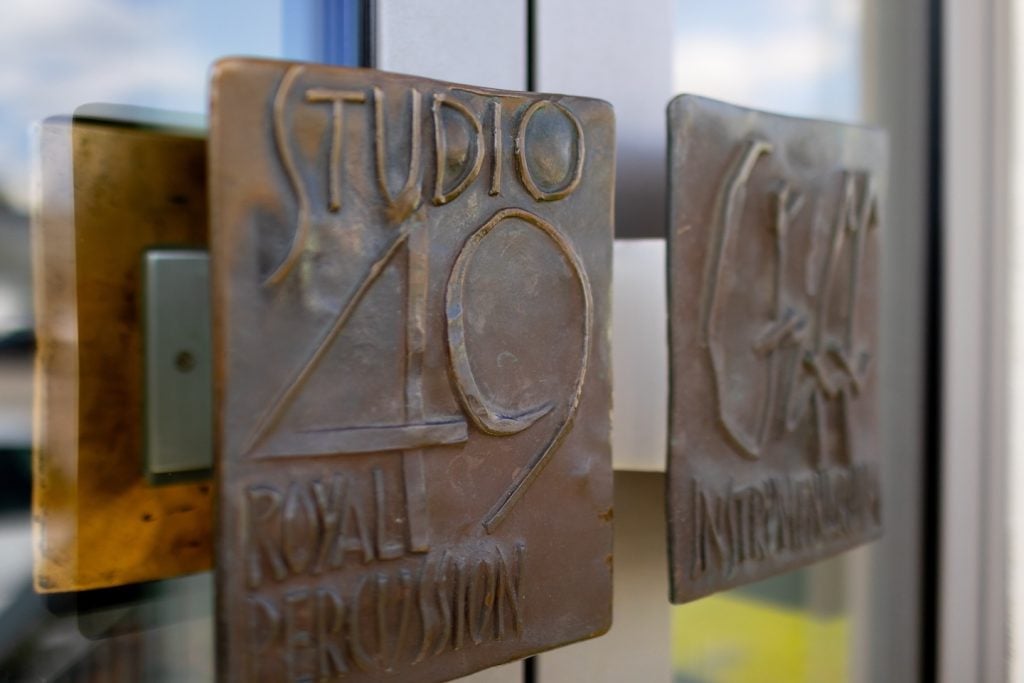
My husband and I traveled to Germany over spring break 2024 to visit to one of my best friends. She had been stationed there in service to the US military and offered to play tour guide and driver for a road trip through Bavaria, her recently acquired German boyfriend playing the role of translator. Always eager for new experiences, we jumped at the opportunity. I requested that our week of driving, eating, photographing, music making, and sightseeing end in a pilgrimage to the Studio 49 Factory in Munich – or as one of my Orff nerd besties likes to call it, The Mothership.
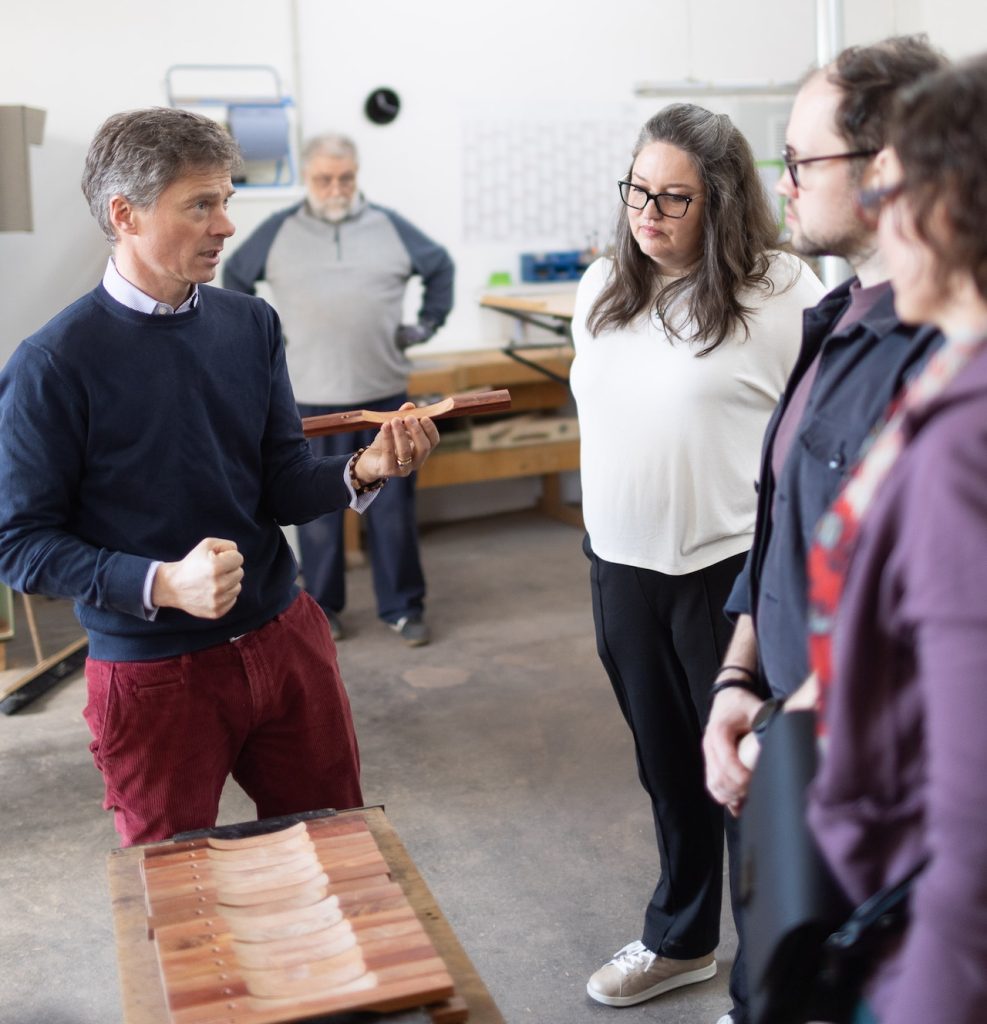
For the decade I have identified as an Orff Schulwerk teacher, I have eagerly unpacked boxes that come all the way from Germany covered in those distinctive yellow stickers, caution tape warning “VORSICHT! ZERBRECHLICH!” Nothing compares to the magic of unboxing the most beautiful sounding Orff instruments I have ever used, nestling them home in my classroom for my students. I wanted to see the contemporary iteration of the company founded in 1949 for the express purpose of answering the demand for the unique instruments that became so important to Orff’s Schulwerk.
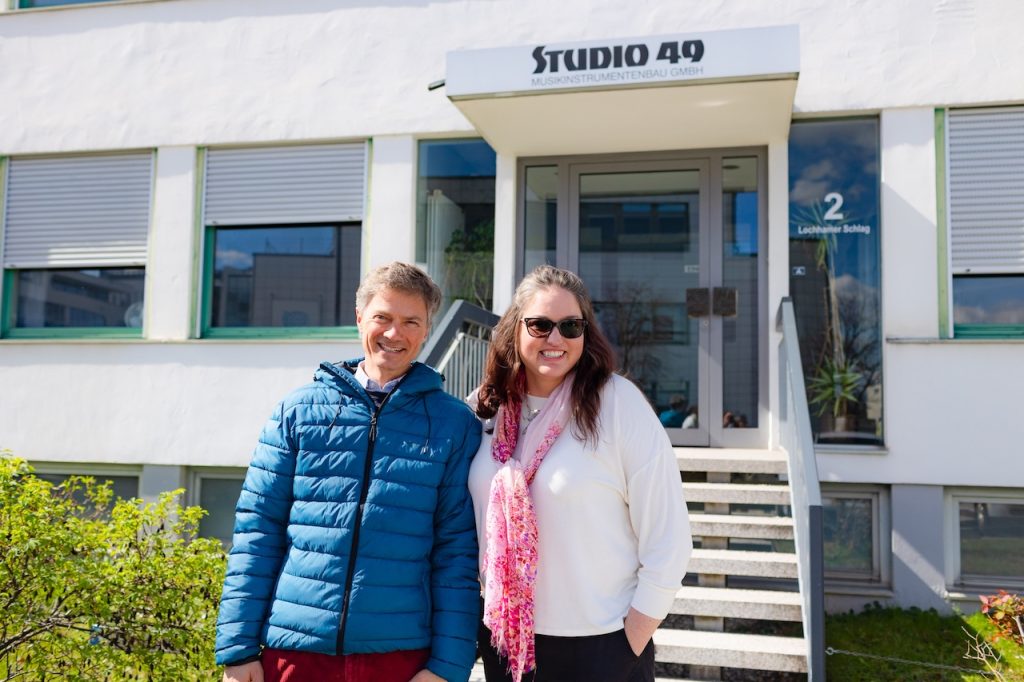
Our party had set up camp in a small boutique hotel in the heart of Munich. A few weeks earlier, Jakob von Wolff, president of Studio 49, generously offered to pick us up and save us the challenge of trying to find the factory on our own. I met him on the curb outside our hotel wearing my Studio 49 ambassador hoodie and was met with a warm smile and enthusiastic handshake when he stepped out of his car.
As we drove through the industrial part of the city, Jakob shared his excitement in leading this company that is so integral to the important work that music educators are doing all over the world. He was interested to hear how my students in southern California use the instruments. A father and musician himself, he was delighted to hear some of the songs my students were currently working on, recognizing the great importance a robust music education holds in a child’s school experience.
We soon pulled into an unassuming commercial building. Jakob led us into the conference room, where a spread of demo instruments was laid out. I taught my friends and husband a short Orff Schulwerk process lesson so they could better appreciate the tour we were about to take. They knew how excited I was to see how my classroom instruments were made.
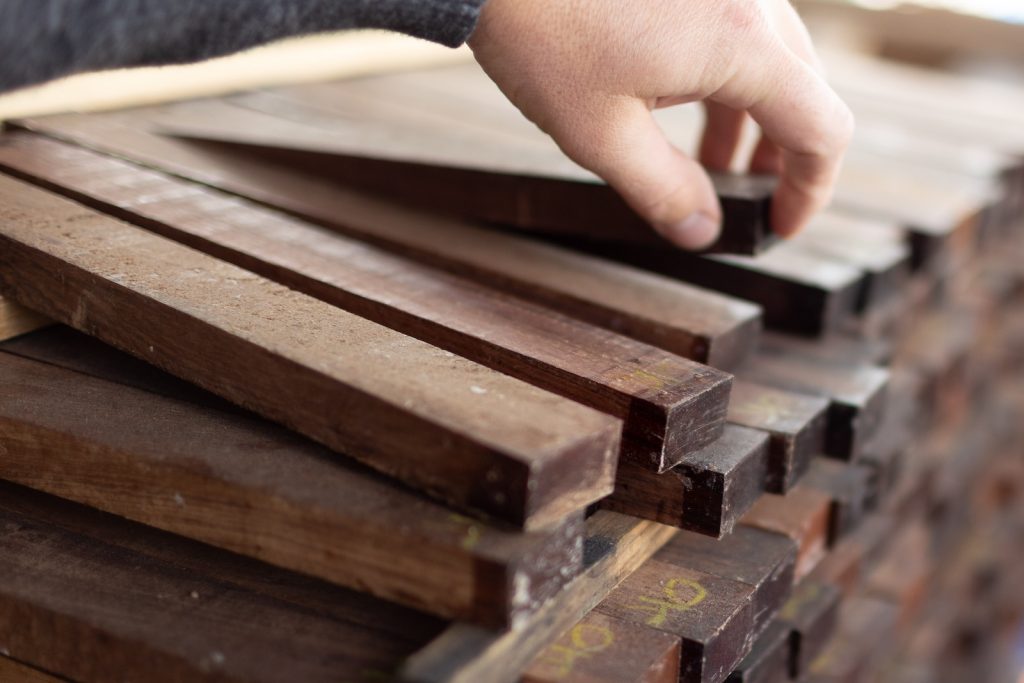
Jakob led us out to the back patio where raw wood sat stacked in enormous piles. Before it can be cut, tuned, and shaped into xylophone bars, the wood must be dehydrated and rehydrated at very specific temperatures and saturations. This ensures that the bars retain their tuning over time. Next, we were led inside to the enormous factory floor. Flooded by natural light from the windows covering the ceiling, each workstation housed an employee performing a different task in the long assembly process to build the instruments. We passed resonator boxes being assembled and varnished, finished bars receiving their final inspection, and mallets being wrapped.
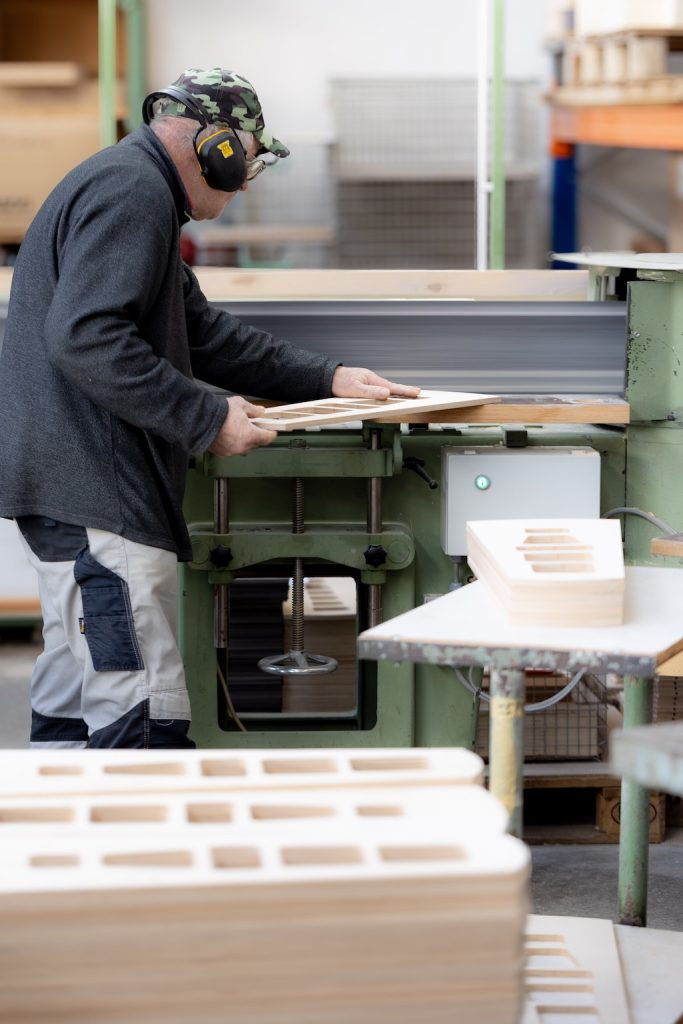
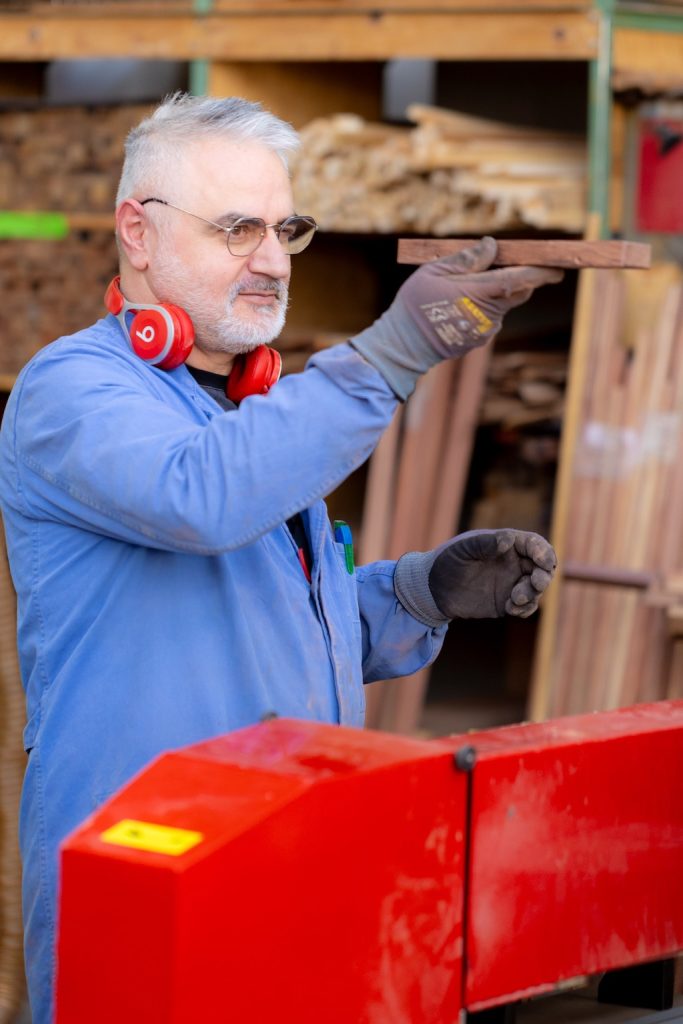
Next was a small workshop where the bars were being cut and shaped. Each xylophone bar begins as a piece of raw wood. The craftsmen hold up the wood, hit it with a mallet, and sort the wood into the different pitches. They can tell what pitch the piece of wood will be by ear even before the wood is shaped. We watched as the wood was cut by machine into the general shape of a xylophone bar, stamped with a pitch, then taken into a small booth for fine tuning. Each bar is carefully shaved, struck with a mallet, and tuned by hand to either 2 or 3 harmonics before being deemed ready.
After that was the metal bar tuning area. The musical dings ringing out from glockenspiel and metallophone bars being fine-tuned recalled a Leroy Anderson interpretation of a factory floor. I couldn’t help but smile at the whimsy of meandering through the room filled with the rhythmic pump of hydraulics, punctuated by joyful rings as each bar was tested.
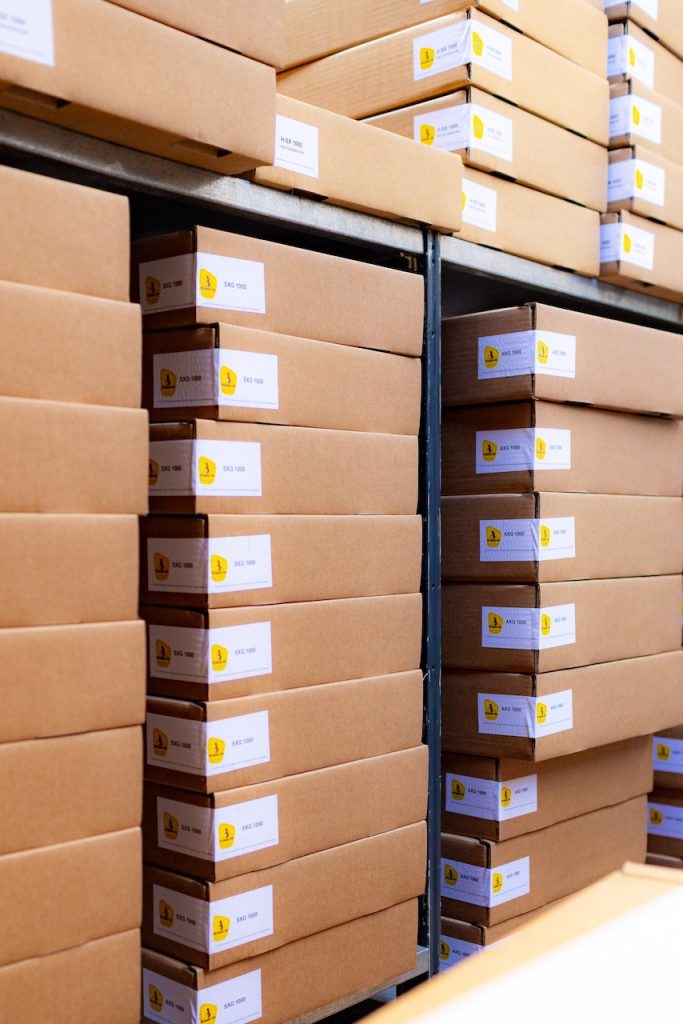
Our tour ended as we carefully edged past instruments being packed for their shipping containers. I instantly recognized the yellow Studio 49 stickers and “VORSICHT!” warnings that always stir such excitement for me when they show up in my classroom.
The last thing we saw before leaving with Jakob was a display of Carl Orff’s “Kaffir-piano,” photographs of Carl Orff and Gunild Keetman, and the first xylophone built by Klaus Becker-Ehmck when he founded Studio 49. The company recently changed hands for the first time from the Beckers to Jakob von Wolff, who is passionate about preserving their legacy. He has exciting ideas for the future, committed to maintaining and increasing the handcrafted quality of these beautiful instruments, so beloved by the teachers all over the world who use them every day. I am grateful beyond words for how generously he gave of his time to this teacher from the other side of the globe.
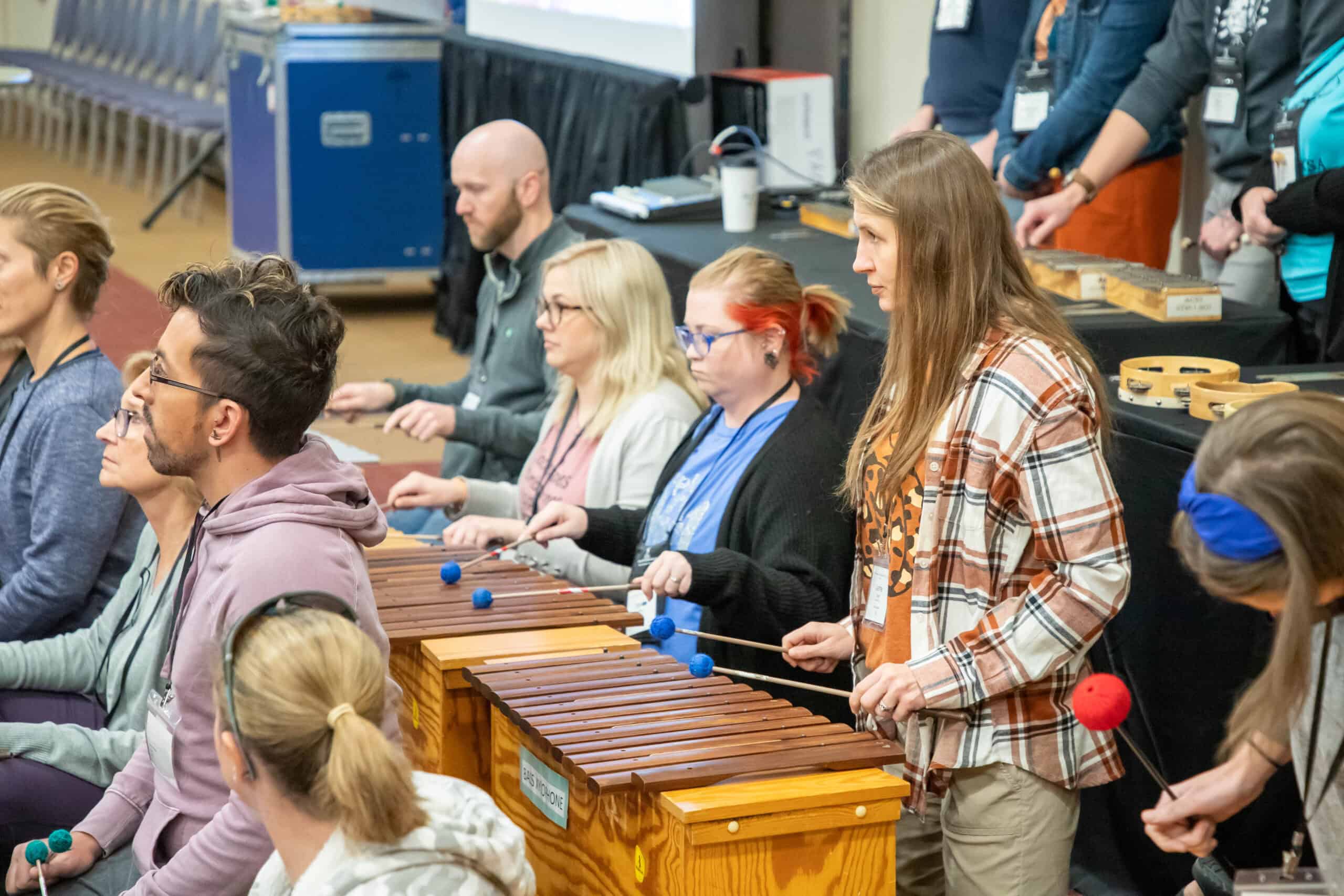
Now, when my students take our instruments out to play, they have a connection through the pictures and video I took and the story I shared with them of this magical little piece of Orff Schulwerk history where their instruments were born. I am even more excited to play my instruments knowing how lovingly they were crafted. I fell in love with the Orff Schulwerk process because I believe this way of teaching honors the creativity and artistry of students above all. It is clear to me that everyone at Studio 49 pours the same care and love into the instruments they make as the teachers who use them pour into their students.





One Response
Hello!
I am an also an elementary music teacher, and today is an unexpected e-learning day where I live in Indiana. I was very grateful to have a little extra time today to read your article from Teaching with Orff about your experience touring the Studio 49 facility in Germany. I used to work in a music instrument manufacturing setting in Indiana, and it was like a warm hug to read your experience at the “Mothership”! So, thank you for your article and I hope you have a blessed day!
Mark