

Why Creative Movement in Music Class?
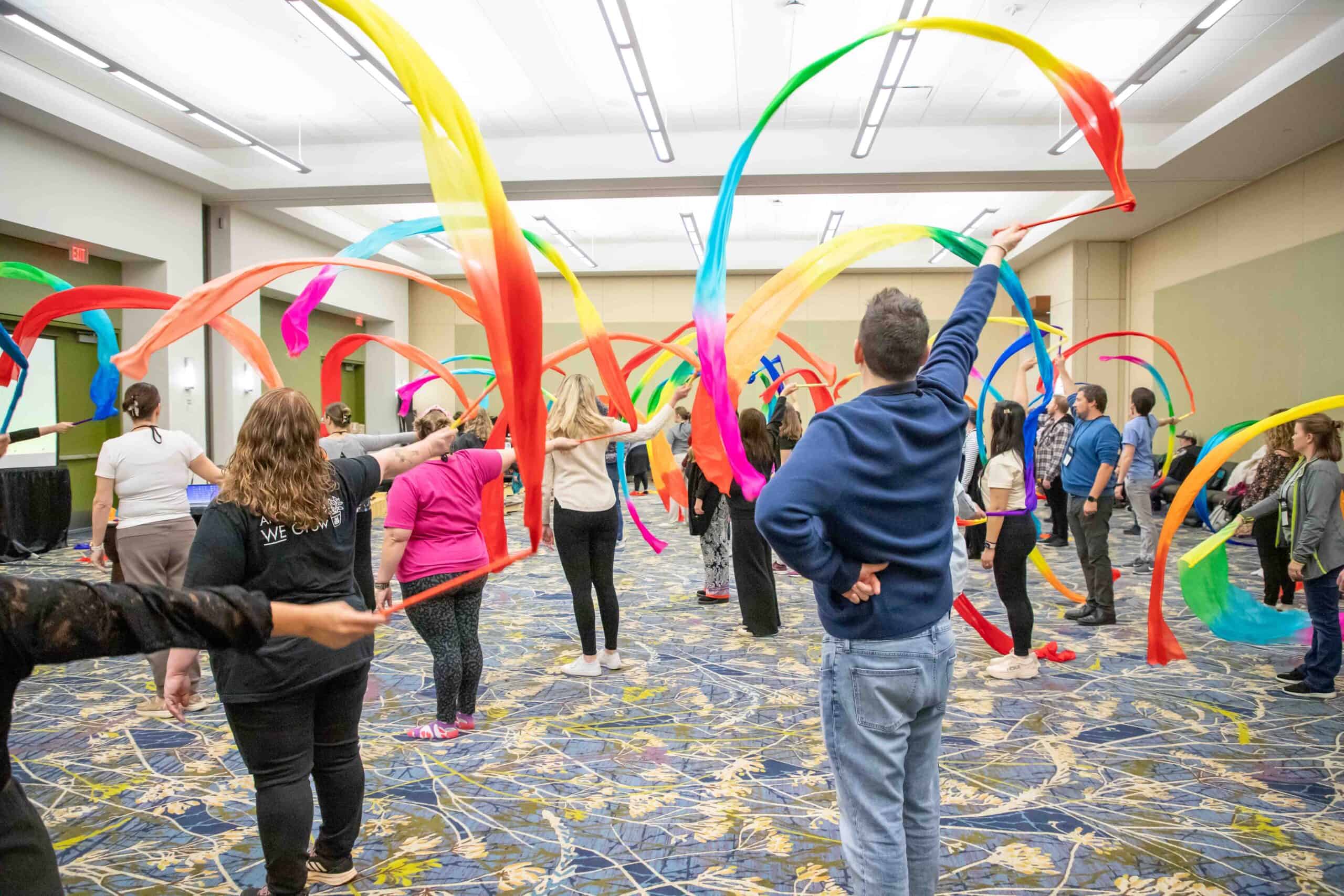
Last week we shared how to begin using creative movement with your students. This week Judith Thompson-Barthwell shares why including creative movement is an important part of an Orff-Inspired curriculum.
Creativity does not occur in a void!
- Teach directive lessons to give specific material for exploration
- Let students experiment with what they know while the teacher facilitates their creativity
Levels of Creativity
- “Windows of opportunity” – within a teacher directed activity, there are little windows where the teacher offers the students a choice (from two to as many as the class can handle)
- Guided Exploration – Teacher is the spokesperson offering clear suggestions during an exploratory activity.
- Improvisation – Students experiment with known concepts. Teacher offers guidance and facilitates as necessary.
What is it good for?
- Introduction – Through creative movement, introduce a step or figure of a dance in various ways before it is attached to the actual traditional dance.
- Understanding – Movement is a great way to see if your instruction is actually penetrating toward understanding. Are students regurgitating what you want to hear/see or have they understood the concept and interpreted in their own way?
- Practice – Creative movement can allow students a chance to practice a skill or concept at their own pace.
- Ownership – When students have the opportunity to show their own way of understanding a concept, they begin to own and be prideful of their learning.
- Affirmation – Through creative movement, each child can be good at something. It is a way to acknowledge and affirm individual uniqueness.
Movement is how most children respond to music
- Plan for meaningful, creative ways of how children can respond to the music in your classroom
- Creative movement gives children more awareness of the possibilities of their bodies
- Being more aware of their bodies leads to making movement more musical
- Learning comes through engaging as many senses as possible. Creative movement should not be ignored as a mode of learning
Movement is how we learn
- Movement/dance is worthy of attention by itself because it is an important art, just as music.
- We learn by moving toward what we want.
- We succeed by creating our own path and moving along it.
- Creative movement exemplifies the bigger picture of life.
Creative Movement makes aural sound more concrete
- Beat /Rhythm/Meter
- Contour of melody
- Harmonic changes
- Energy/Force/Quality/Dynamics
- Form
Creative Movement aligns with National Standards
Performing
- Analyze: Analyze how the content of varied musical works inform the response.
- Enduring Understanding: Response to music is informed by analyzing content (social, cultural, and historical) and how creators and performers manipulate the elements of music.
- Essential Question: How does understanding the structure and context of music inform a response?
Connecting
- Connect #11: Relate musical ideas and works with varied context to deepen understanding.
- Enduring Understanding: Understanding connections to varied contexts and daily life enhances musicians’ creating, performing and responding.
- Essential Question: How do other arts, disciplines, contexts, and daily life inform creating, performing and responding to music?





3 Responses
Perfectly written and perfectly spot on!!!! Thank you, Judith!
I had totally been thinking of you as I read this. 😛
Moving is important for all learners in all subjects! http://www.edweek.org/tm/articles/2013/03/19/fp_griss.html