WHAT TO DO AS THE SEMESTER STARTS
To set my undergraduates up for success in their music education journey, I do several things to lay the groundwork. Some of these things take time, but everything can be started immediately. Your students will benefit greatly from each of these steps that you take. Not only will they be better prepared to student teach, but they will also have a fantastic network of experienced music teachers willing to mentor and guide them for life.
GET TO KNOW THE ELEMENTARY MUSIC TEACHERS AND FINE ARTS COORDINATORS IN YOUR AREA:
I was fortunate to be a retiree from one of the school districts near Charleston Southern University. I spent my career getting to know my fellow educators. I knew who had taken Orff levels courses, who actively sought professional development opportunities, who engaged their students in active music making, and who may just be relying on video lessons from popular online music curriculum sites. Because of this, I have a long list of great mentors already started.
Two other school districts surround CSU. I knew a few teachers in each of those counties who were active in our Orff Chapter. But for me to get to know more teachers personally, I made an effort to reach out to the coordinators, introduce myself, ask how I could serve them and their teachers. I often visited them at their district music activities and introduced myself and showed a genuine interest in their programs. Once I established a relationship with the coordinators and had provided my services as a staff development presenter, an adjudicator for honors choir/school of the arts auditions, and had invested in their programs, I was able to get recommendations on who would best serve my student teachers and practicum students. We, in essence, became partners by investing in one another’s programs. Another amazing benefit of working with the District Fine Arts Coordinators is that we communicate directly to fill job openings with my students.
PAIR YOUR STUDENTS WITH MUSIC TEACHERS WHO EMBRACE THE ORFF APPROACH
Most elementary music methods classes require students to observe a general music classroom for 20 hours during the semester. This is the perfect time to be intentional about who you are pairing your students with. I am fortunate to have a local chapter of AOSA in my city. I pair my students with teachers who have taken at least one level of the Orff Levels Courses. I have also used teachers who may not have taken Orff levels, but who are active participants in our chapter workshops.
If there is no Orff chapter near you, work more behind the scenes and make classroom visits to see possible mentor teachers in action. Since making personal visits takes time, I routinely encourage my students to share what they experience in their practicum classrooms. This helps me to better understand how their host teacher runs the classroom, even if I have not been able to visit first. If a student reports that the teacher is frequently absent or only shows videos in class, I know I need may need to find a new mentor for future semesters. (NOTE: I believe one can learn from any kind of example, whether it be great, average, or bad! No observations are ever wasted.)
REQUIRE YOUR STUDENTS TO JOIN AOSA AND USE THE RESOURCES OFTEN
In the first class of each semester, I have the students join AOSA. I have them join in class from their devices so there is no chance of forgetting. I make it their first quiz grade and lure them in with the promise of their first 100% in the class. I can require this of them because AOSA allows college students to join for free and have access to everything that a paying member gets! I then go a step further and give occasional assignments from the website. These assignments range from finding video recordings from conference presenters to locating lesson plans or reading articles related to our current in-class topics.
REQUIRE YOUR STUDENTS TO PARTICIPATE IN LOCAL ORFF CHAPTER WORKSHOPS AND REWARD THEM HANDSOMELY
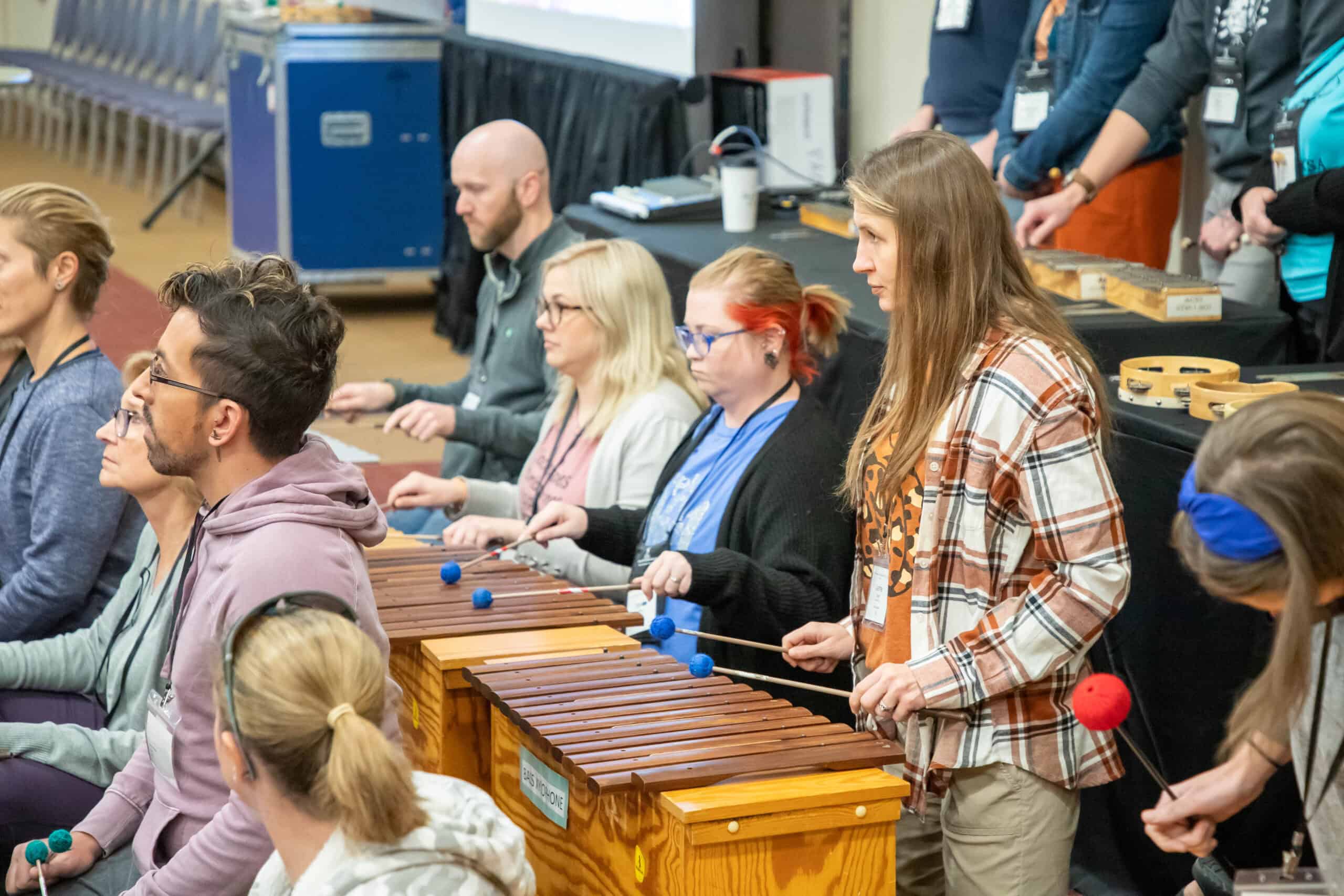
I firmly believe in the value of local chapter workshops. Participating in these workshops is just as valuable as time spent observing in a classroom. For this reason, I reward my students for attending Orff Workshops by giving them hours towards their practicum requirements. I award them one hour for each hour of the workshop, and I then give them an additional hour if they go to lunch with the presenter and fellow teachers to network. (Our Lowcountry Orff Chapter has a traditional after-workshop lunch which is the perfect time to network.) Students must write reflections on what they learned in the workshop and include these in their practicum journals along with the handouts.
If there is no local chapter near you, grant an hour for each elementary music workshop they attend at your state music educators conference. Allow them to earn up to 3 hours by watching workshop videos on the AOSA website or webinars on the Teaching With Orff website. There are many great places to get quality Orff-centered workshop experiences. A list of resources to help you in this area will soon be provided!
By implementing these few steps, you will be providing your students and yourself with a network of passionate and successful music teachers. The local teachers that I work with will do everything in their power to help my students and that warms my heart like nothing else. We have created an environment where I pour into my students and into my local community of music teachers. These teachers pour into my students. My students put their heart and soul into the music programs of our local teachers. My students graduate and become mentors to the next wave of music education majors. This is perhaps the best “circle of life” that can be created!
As you begin the journey to connecting your students with the Orff approach and the local Orff community, I would love to hear about your progress! Comment below to share your story!
Click here to learn more about our free perks programs for professors and pre-service professionals. Sign up to get more goodness from Vicki plus additional free and discounted resources designed to support college professors and music education majors who are passionate about creative, active, and joyful teaching.